How to apply for a loan in the UAE?
How to apply for a personal, car or home loan in the UAE?
Dubai: Moving to the UAE can often be an instant upgrade in one’s lifestyle – from a safe community to state-of-the-art infrastructure, the country has a lot to offer residents. Add to that an easy availability of loans and you have yourself a very tempting mix. From buying a brand new car to going on your dream holiday, everything can be funded through banks. However, it is important to borrow wisely as it is also quite easy to get stuck in loans that you are unable to repay.
Here, we break down all that you need to know to apply for a loan in the UAE.
What kind of loan are you looking for?
While there is a slew of options for customers, loans can broadly be categorised as …
- Personal loans
- Auto/car loans
- Home loans/mortgage
- Business loans
However, before you begin the process of applying for a loan, there are certain eligibility criteria that you need to consider. Banks evaluate the credit worthiness of an applicant based on income, credit score and debt burden ratio, so know what these terms mean before applying for funds.
It’s a three-digit score assigned to an individual that plays an important role in deciding one’s eligibility for a loan or credit card at the bank. The higher your credit score the more benefits you can enjoy like faster processing, less paperwork, low interest rates, high loan amounts and credit limits.
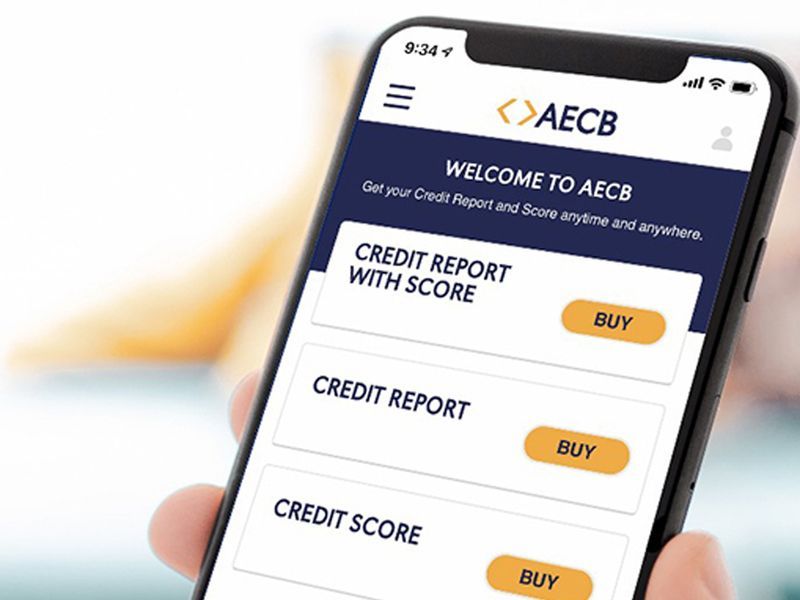
The Al Etihad Credit Bureau (AECB) provides the credit report, which includes the credit score of an individual. It collects financial information of an individual from various sources and generates a report by analysing the details.
The credit score ranges from 300 to 900. The higher the score, the higher the probability of getting a loan approved. Usually, a credit score above 700 is considered good. A score below 400 is most likely to be turned down by most banks. If your credit score is somewhere in between the two, you can improve it as well. If you miss payments on existing commitments, like credit card payments or your electricity bill, these can have a negative effect on your credit score.
So, before applying for a loan, make sure your credit score is good to avoid rejection.
What is a debt-burden ratio?
Another factor that can have an effect on your loan eligibility is your debt burden ratio (DBR). Central bank regulations makes it mandatory that one’s DBR should not exceed 50 per cent of his/her total monthly income. DBR calculations include installments on all existing loans including personal loans, auto loans, credit card limits and other loan products.

How to find your DBR
DBR = [All loan installments + installment-based credit taken on credit cards + 5 per cent of the total limit on all cards] as a percentage of total income.
Consider this example, if you have two loans with a total of Dh1,500 monthly instalment and your credit card limit is Dh20,000 and your salary is Dh10,000, then your DBR will be 25 per cent.
That is 1,500 + 1,000 (which is 5 per cent of 20,000)/10,000 = 0.25*100 = 25 per cent
Personal loans are also known as unsecured loans because they don’t require a collateral for approval.
The bank may or may not require that you transfer your salary to the account. Another aspect to look at is whether you company is on the approved list of companies for the bank. Some companies that have a history of late payment of salaries, for example. Some banks only provide personal loans to employees of companies that are on the approved list.
If you do choose the salary transfer option, it could offer you a lower interest or profit rate.
For no salary requirement, rates can be twice as much or more, according to experts.
Documents required to apply:
- Emirates ID and valid passport with valid residence visa.
- If the bank requires a salary transfer then a letter of salary transfer will also be needed.
- The bank may ask for post-dated cheques for EMI (Equated Monthly Instalment) for security reasons.
- Latest 3 months Bank statement with salary credits
Am I eligible?
Every loan has a minimum monthly salary requirement, and for personal loans you can get upto 20 times your salary with certain upper limits that can vary from bank to bank. The loan limit can also change based on whether your employer is on the approved companies list.
Interest rate can either be fixed or charged on a reducing balance. What does that mean? Variable rate is lower compared to the fixed rate. Since this is charged on the reducing balance, you pay less amount of interest for the first 6 months, when your principal loan amount is high, thus saving more.
Approvals can take anywhere between a day to a couple of weeks, depending on the paperwork.
Note: Some banks may not allow customers to take a home loan to fund the down payment of a property purchase. Speak to your bank to find out if you would like to take a personal loan for this purpose.
A car loan is essentially a personal loan, with the car mortgaged to the bank. For these types of loans in the UAE, you must have a salary of at least Dh3,000.
Documents needed
- Application form for the car loan including vehicle quotation
- Valid visa
- Driving license
- Salary certificate/proof of income
- Bank statement (three to six months depending on the bank)
- Partnership certificate in case of partnership in business
Applying for these loans is relatively easy and most car dealerships have a panel of banks that they deal with. If you take a loan from one of these banks, the paperwork is managed by the dealership.

Comments